AI site builders have got good. Ask one for a launch page and a minute later you have something that looks finished: a clean hero, a pricing table, a few kind words from customers. That is exactly the problem. Slop used to look bad. Now it looks fine, and fails where you can't see.
We ran the test properly. We made up a product, Bookwell, an appointment booking app for small clinics, and gave one popular AI builder, Lovable, a single plain prompt: a launch page with a hero, features, pricing, testimonials and a call to action. Then we built the same product's page the way we'd build it for a client. Both are live, so you can check everything below yourself:
Bookwell isn't a real company. Neither page is selling anything.
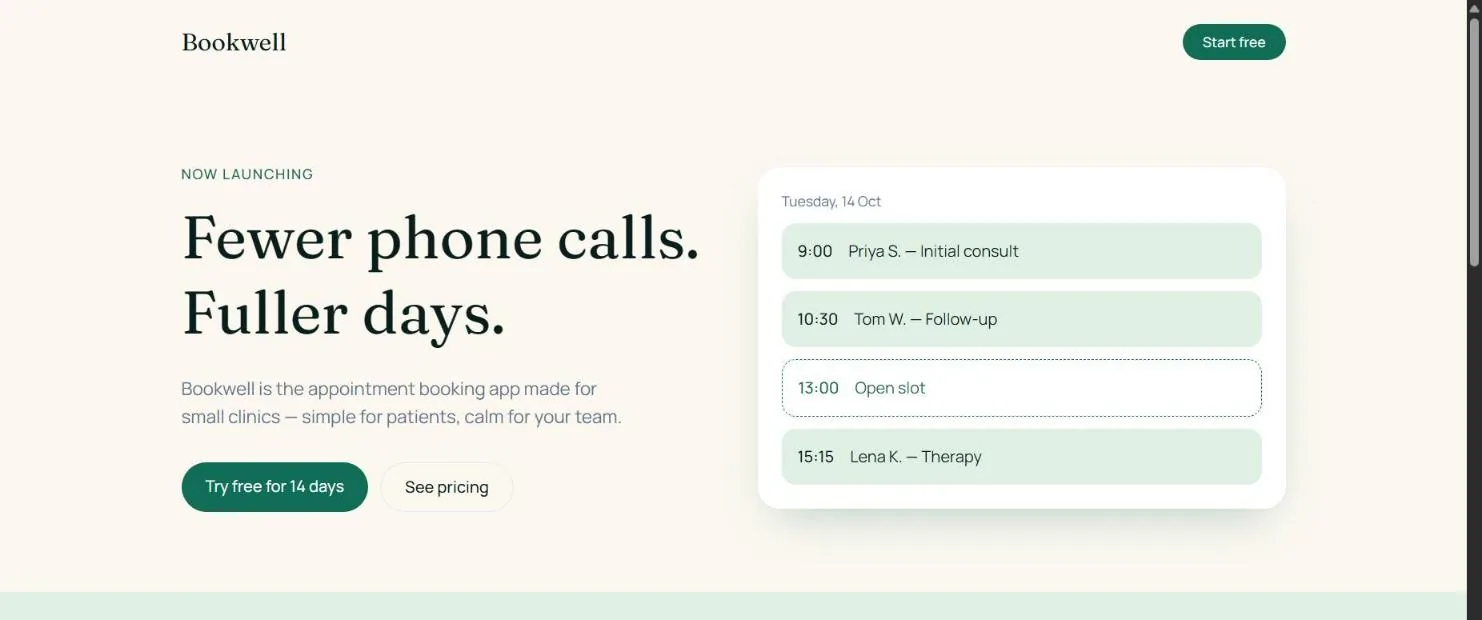
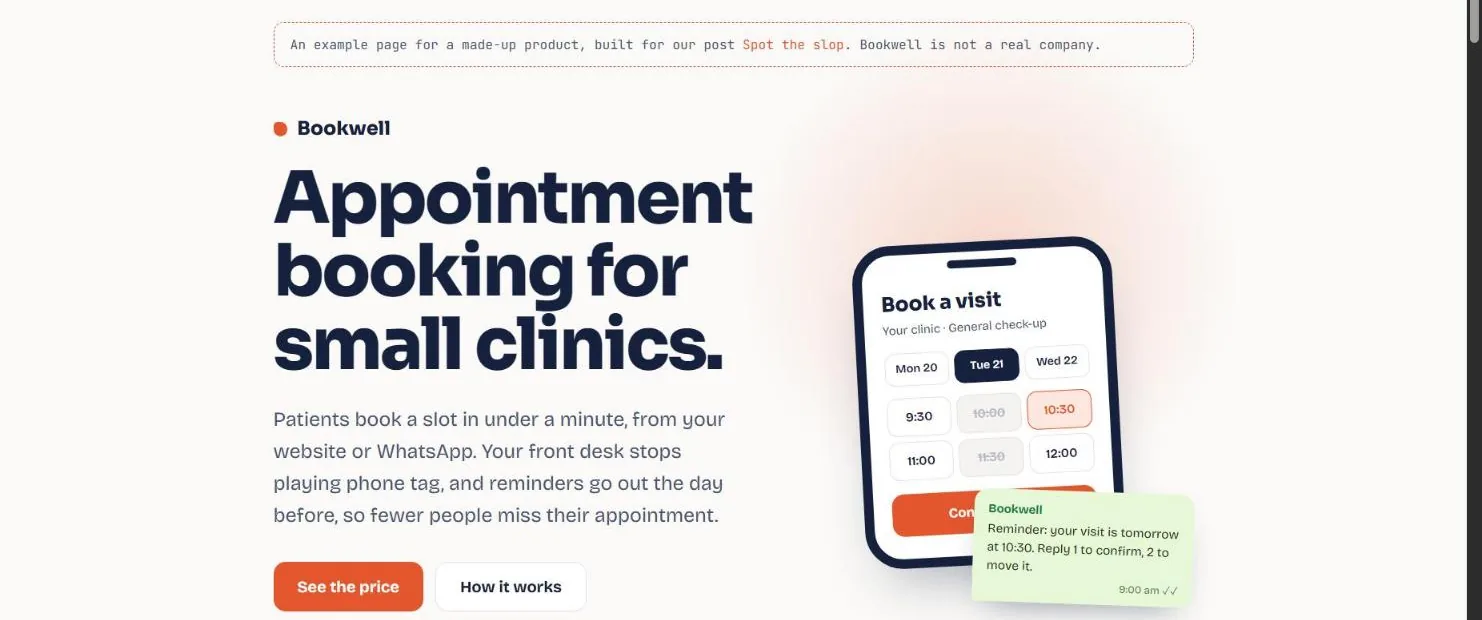
Or scroll both, live, side by side:
What the AI got right
Credit first, because it earned some. The page is tidy and readable. The headline, "Fewer phone calls. Fuller days.", is a good line. There's a title, a meta description and link previews, robots.txt lets search engines in, and some of the text is in the HTML the server sends, which plenty of hand-built sites still get wrong. As a first draft it's a real head start.
Where it quietly fails
1. It invents proof. The page quotes three doctors by name, at three named clinics, saying how much Bookwell changed their week. None of them exist. It also promises reminders that "cut no-shows by up to 40%", a number nobody measured, and three price plans nobody chose. To the tool's credit, it said so: it listed what it had made up and asked for the real details. But a founder in a hurry ships the page, and now the launch is built on quotes a customer could check and find empty. That's the slop: not the look, the made-up parts that read as true.
2. Machines can't tell what it is. We ran both pages through our AI search check, the sixteen checks we use for how well ChatGPT, Perplexity and Google's AI answers can read a page. On 17 October the AI-built page scored 54 out of 100. It has no structured data saying who is behind it or what it sells, no questions and answers for an engine to quote, no canonical address, no sitemap and no llms.txt. Its server HTML carries about 230 words. An AI answer asked "what's a good booking app for a small clinic?" has very little here to go on.
3. It looks like everything else. Calm green on cream, a soft serif headline, rounded cards: the safe "trustworthy software" look. It isn't ugly. It's just the average of a thousand pages, so it says nothing about this product. We noticed because our own first draft of Bookwell drifted to the same serif and nearly the same green before we caught it and gave Bookwell a look of its own. The pull toward the average is real, for people and for tools.